Click logo for Home Page"
T-Tail-Tall-Tail:
Fire On the Ground
Synopsis: After landing, the failure of a brake
system part caused a hydraulic
leak and subsequent fire, made worse by an aircraft
design deficiency.
The crew made an uneventful PAR approach at MCAS
29-Palms.
During landing rollout, the engineer noticed the
failure of #2 Hydraulic
system. The crew brought the aircraft to a stop on
the runway and selected
"Emergency Brakes". With normal gear indications and
pressure on #3 hydraulic
system, the crew decided to clear the runway before
shutting down the engines.
As they cleared the runway, #3 Hydraulic system
failed.
The pilot used reverse thrust to stop the aircraft.
The scanner deplaned to pin
the gear and was met by members of the base fire
department, who told him the
aircraft was on fire and to evacuate the aircraft.
The crew quickly completed
the "Fire on the Ground" emergency checklist and
evacuated the plane without
injury. The base fire department extinguished the
fire, but not before it had
caused substantial damage to the aircraft.
Because they had flown a PAR, the crew was still on
approach control frequency
and had not switched to tower frequency, before the
loss of the #2 Hydraulic
system. They did not hear the urgent warnings from
the tower about the fire in
the landing gear on "Guard", because neither pilot
was monitoring the
frequency. The engineer, who was monitoring guard,
was distracted fay the
emergency, and also failed to hear the tower's
warnings.
Investigators found that a brake swivel, on the
right landing gear, had
separated, spraying #2 Hydraulic system fluid on the
brake and starting a fire.
As designed, the fluid stopped automatically when
the hydraulic fuse set after
20 cubic inches (approximately 11 ounces) of fluid
had sprayed out of the
swivel. Under the brake system design at the time,
the emergency brake system
was not fuse protected. While the fire would have
gone out almost immediately,
after the #2 Hydraulic system fuse set, the
selecting of "Emergency Brakes"
dumped the full pressurized fluid of #3 Hydraulic
System on to the fire,
greatly intensifying it.
As a result of this incident the brake design was
modified to fuse protect both
Normal and Emergency brake systems.
Steve Quiqley added the following information about this incident in a message posted on the message board:
The tail number of the aircraft was 67-0007 and the incident occurred at 29 Palms. This was just one of many accidents and incidents affecting this series (67-00xx). The accident board could not find the cause of the fire initially, so after a day or two a fire propagation expert arrived from Wright-Patterson. He went into the wheel well, looked up, looked down and moved a piece of melted metal with a pencil and there was the source of the leak. He spent about 15 seconds in the wheel well, if that. --- Steve Quigley
Bob Wicke sent me an email on 9/30/2004 with the following :
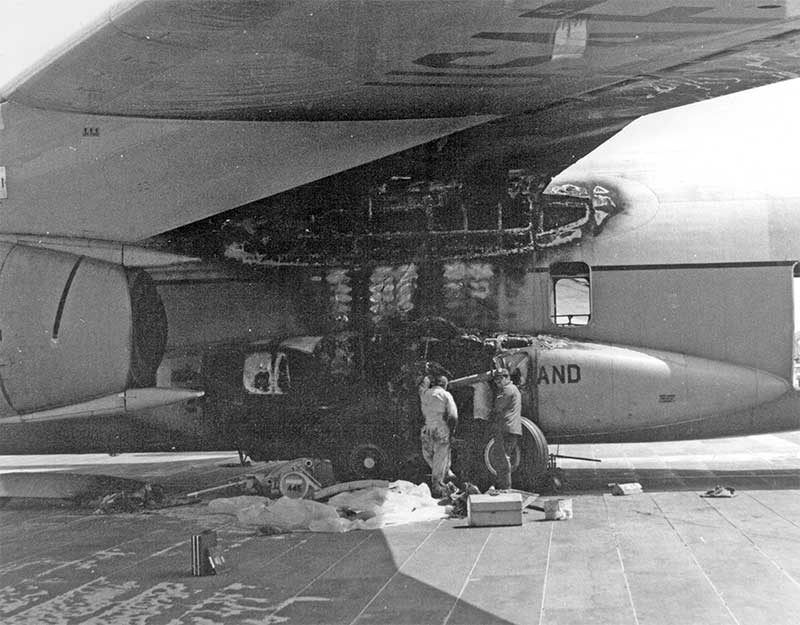
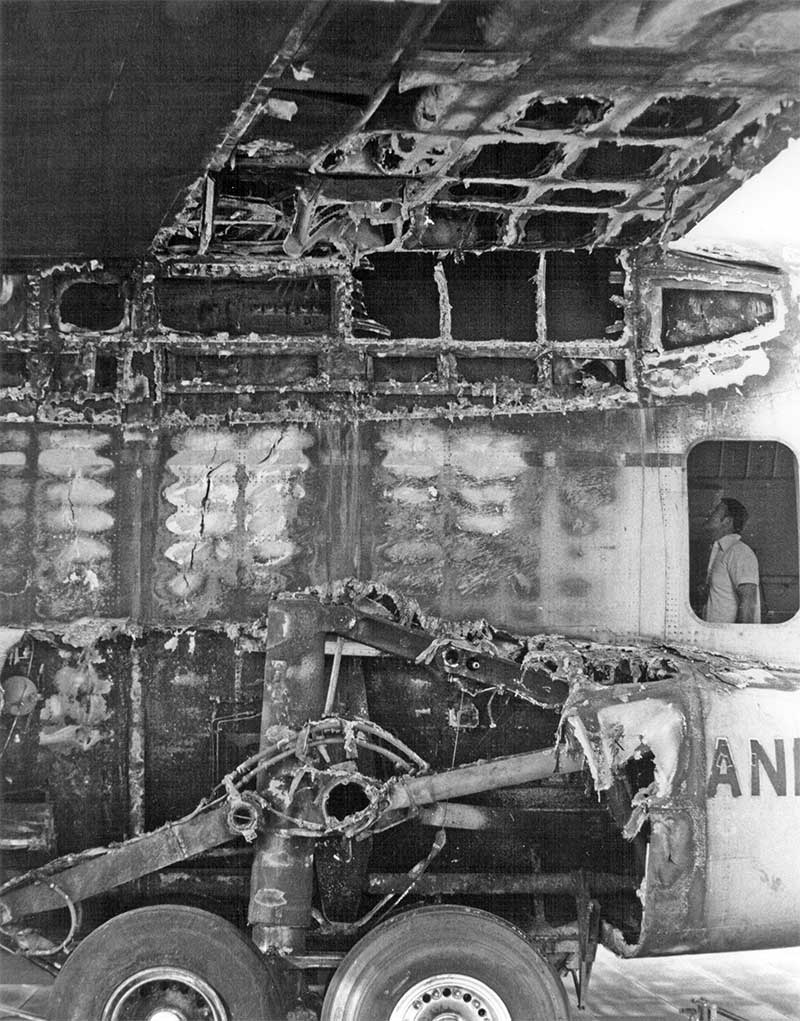
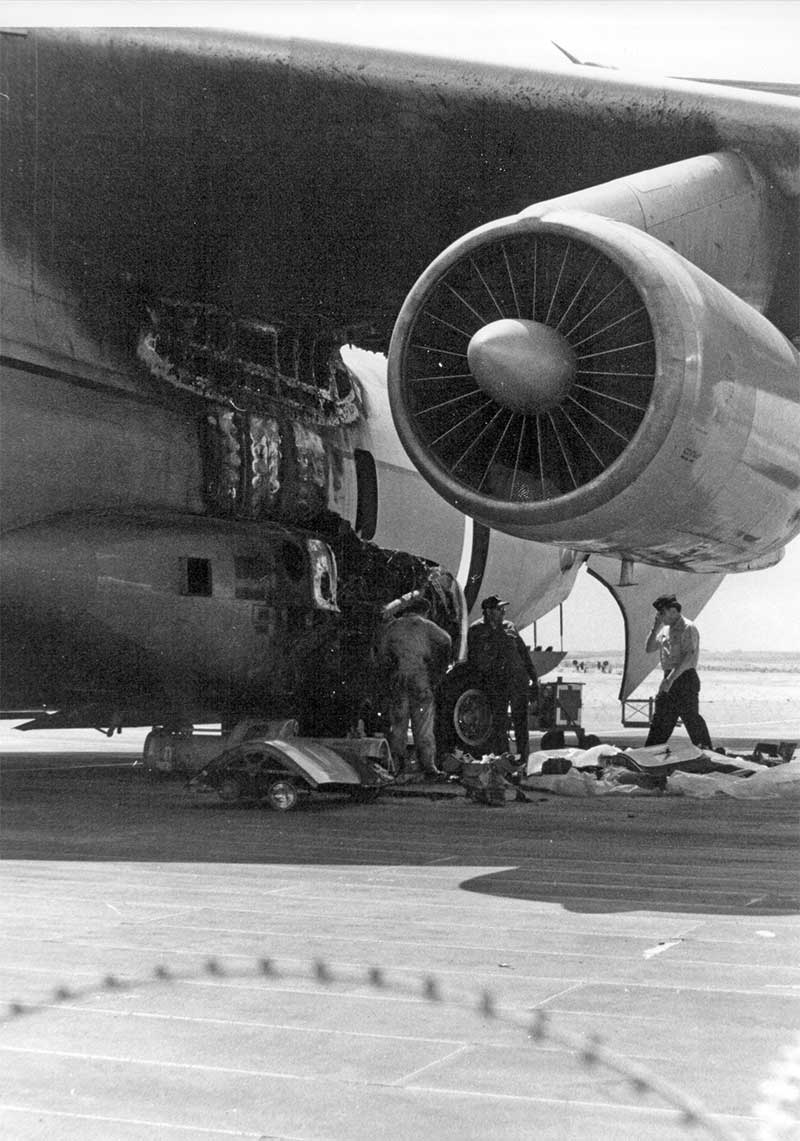
Some updated info on the fire on the ground from the brake failure. It happened at 29 Palms MCAS in California. I know because I was there serving my mandatory tour as a SOF for the ALCE just after my AC upgrade in the summer of 1976. I was on duty that day when the aircraft taxied in and switched to emergency brakes and ignited a huge fire. I jumped into the aircraft that was parked just in front of the burning bird and told that crew to start two engines and taxi farther away so we wouldn't lose two C-141s. Fortunately, the fire was extinguished, but not before it had done major damage to the left wheel pod and the left wing root area, which was melted down to the spars from the heat. It was stuck on the ground for many months while the Lockheed engineers beefed it up for a flight to depot to be fixed. I have some pictures of the end result at home in one of my albums, which I will scan and email to you also. ---- Lt Col (Ret) Bob Wicke
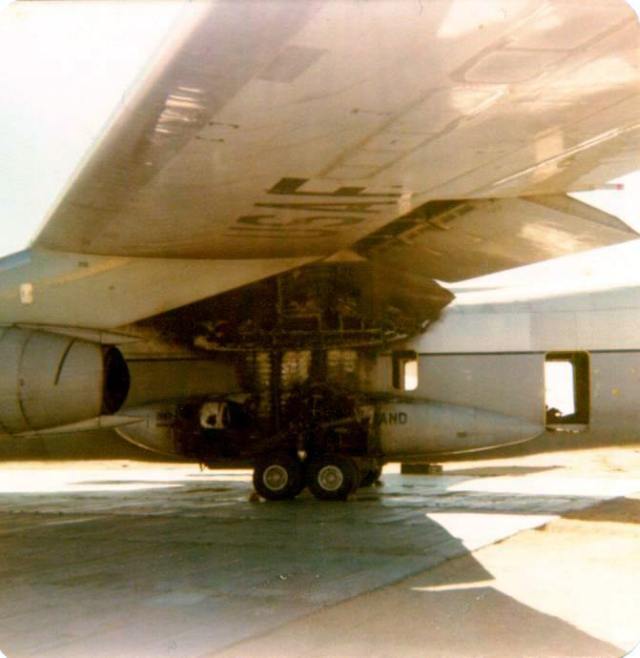
Photo Source: Bob Wicke
Russell A. Gray, one of the Flight Engineers on this aircraft, sent me an email in January 2005 with the following comments :
I'd like to clarify some points to the story. The
Crew operating the aircraft
that day was assigned to the 15th MAS and
I was was performing
Scanner duties. We had departed Norton AFB enroute
to MCAS Cherry Point, with a
stop at Twenty Nine Palms MCEAF. We were ferrying
sufficient fuel for our
flight from Twenty Nine Palms to MCAS Cherry Point.
Lockheed engineers later
determined this may have saved the aircraft, that
and quick action by the
Marine Firefighters.
After an uneventful landing utilizing max reverse
and minimum braking, we
cleared the runway and taxied to the ramp. We parked
behind another Starlifter
and began running the appropriate checklists. JD
Harston was at the panel. When
the AC gave me clearance to depart the aircraft, I
opened the door and
attempted to hand the Crew Chief the gear pins and
noticed he was several yards
off to the left of the nose pointing at the left
wheel well.
I turned and saw the entire wheel well engulfed in
flames. I notified the rest
of the crew of the emergency and they evacuated the
aircraft with the the three
pilots and engineer exiting out the crew entrance
door and the two loadmasters
exiting out the troop doors.
The accident investigation board determined that the
cause of the accident was
that the #5 brake swivel separated from the brake
when emergency brakes was
selected depleting the #3 system on the hot brake.
It was also discovered that
during taxi in there was a hydraulic leak coming
from the left gear and may
have contributed the the incident. If you would like
any further details please
don't hesitate the ask.
Russell A. Gray MSgt (Ret.)
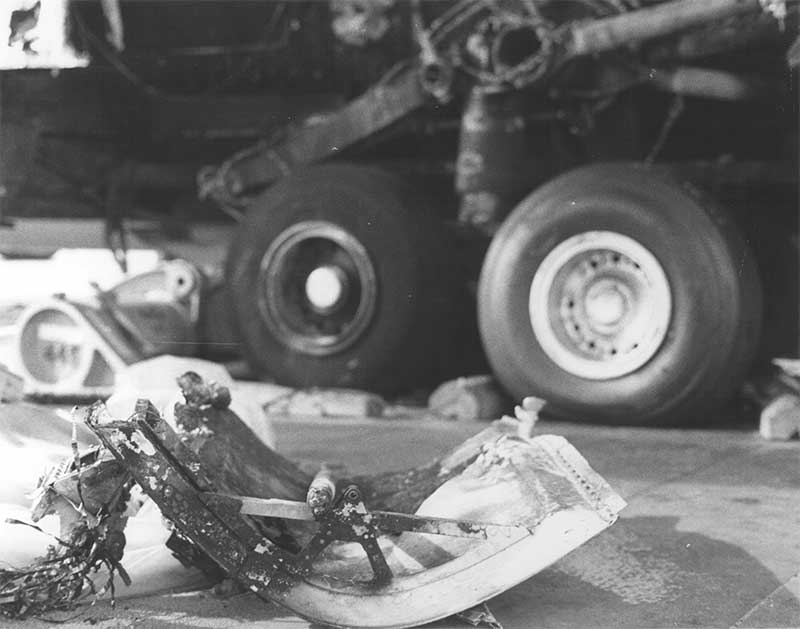
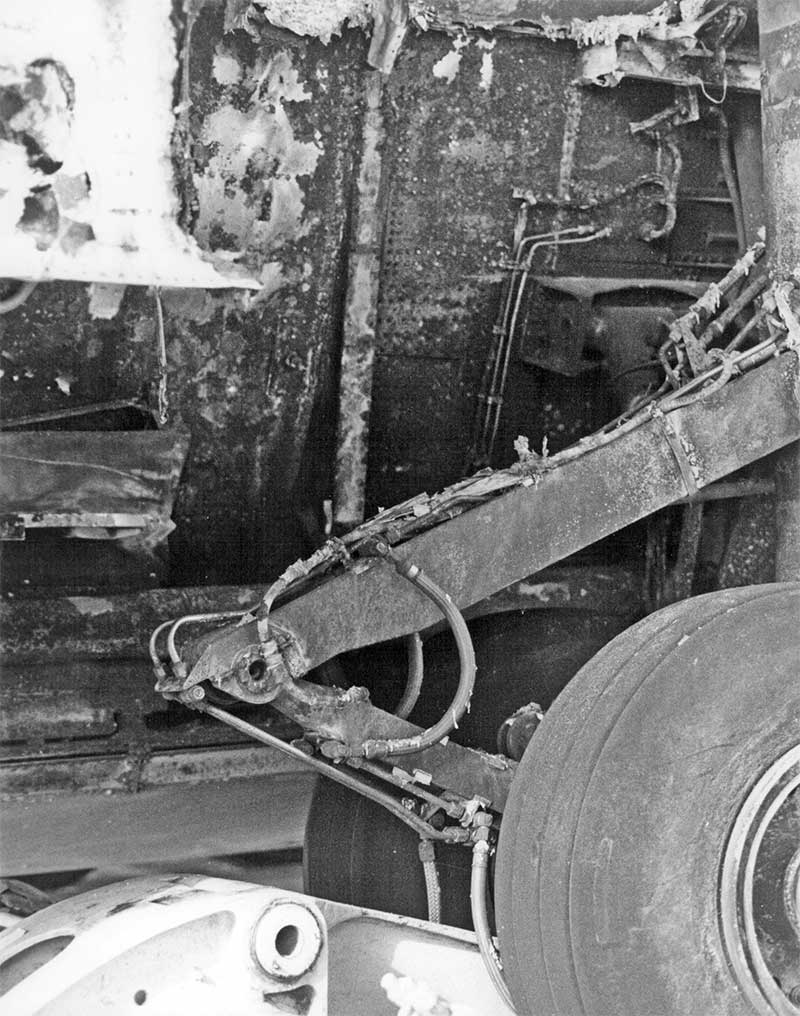
The photos below are of the aftermath of the fire. These are Air Force photos submitted to the site by Bill Weeper.